STOKE Tours the Helena Air Traffic Control Tower
Author: Matt
Article Published: 08/07/2026 Volume: 5 Edition: 05Matt Nelson
About six years ago here in Townsend, Tina Holman and Amanda Domino were saying that there wasn’t much the kids could do if they were not interested in sports or 4H. That meeting generated the start of the STOKE organization, and it was the first one in Montana. STOKE stands for Science, Technology, Outdoors, Knowledge, Entrepreneurship. Now, there are teams interested in robotics, ceramics, pottery making, outdoor programs and activities like horse riding and paddle boarding, theater, arts and crafts.
Amanda’s husband Jim is the STOKE President, Tina is the Vice President, Amanda is the Secretary, John Hahn is the treasurer, Candice O'Hara is the STOKE Program Director, Teddy works with ceramics and some of the outdoor programs or activities, and Townsend School Superintendent Brad Racht is one of the board members.
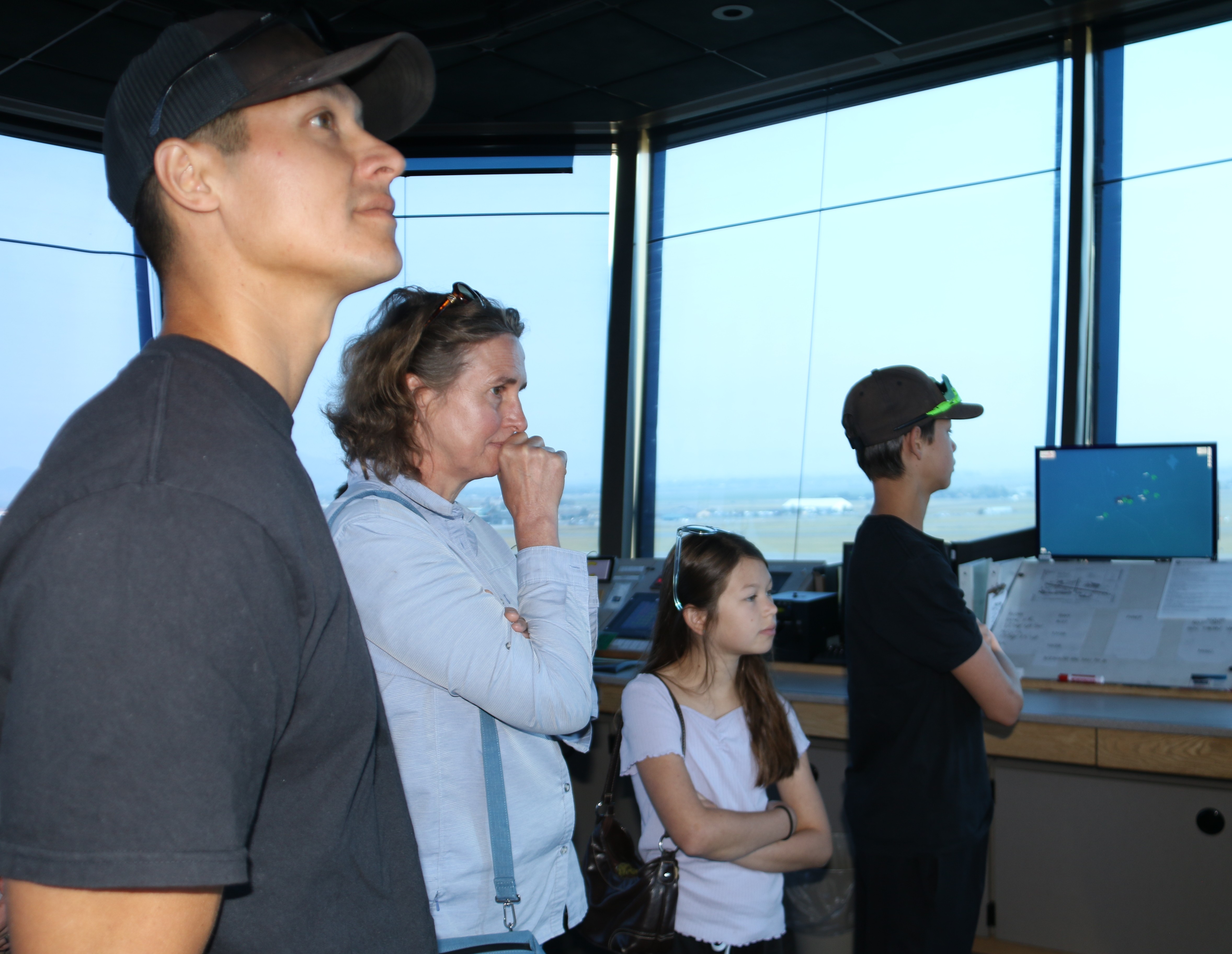
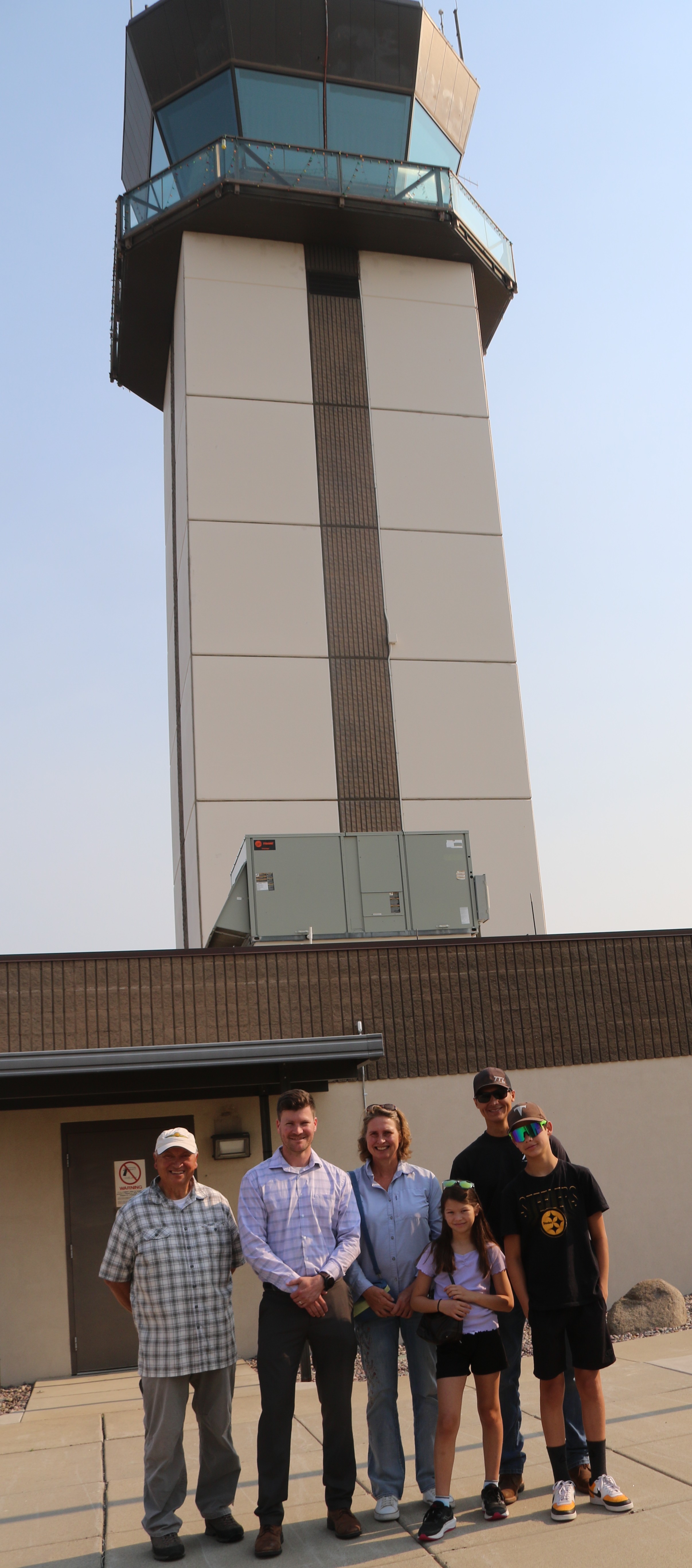
On Wednesday, July 29th, a few members of the recently formed Townsend STOKE Aviation team went to Helena Airport for a tour of the Air Traffic Control (ATC) tower. Tina Holmann drove the STOKE van and was accompanied by Dwight Thompson, the Broadwater Airport Manager; Doug Chevez, who flies helicopters for Billings Clinic based out of Bozeman; his two children, James and Hannah; and me.
Leading the tour was the manager of the ATC tower, Logan Williams. To get to the top, there is an elevator that goes up the equivalent of six flights of stairs, and then one must walk up the last two flights. Logan gave a very detailed tour and explained the roles of the two controllers and how they interact with pilots who are flying under Visual Flight Rules (VFR) and Instrument Flight Rules (IFR). This briefing lasted about 30 minutes. While he gave the briefing, one could hear in the background the air traffic controllers clearing aircraft for takeoffs and landings on the main runway 9/27, meaning 90 degrees and 270 degrees, or East and West. The runway is 9000 feet long and 150 feet wide.
Pilots must fly IFR when visibility is obscured by clouds, rain, fog, etc. Commercial aircraft generally fly IFR, even when the visibility is good. Whether flying IFR or VFR, all pilots are required to file flight plans for distance travel; however, for local VFR flights, flight plans are not required. The controllers print out information such as the tail number and type of each aircraft, the destination, reporting frequencies, etc. It is a very efficient system. Throughout the country, there are multiple radar sites that keep track of the IFR aircraft.
As a pilot, I found this to be a very good briefing about the operations and efficiency of the Helena ATC tower.
Article Images
Click on Image Thumbnail(s) to view fullsize image
PhotoCredit: Matt Nelson
Image 1 Caption: Doug Chevez, Tina Holmann, Hannah Chevez, and James Chevez
Photo Credit: Matt Nelson
Image 2 Caption: Dwight Thompson, Logan Williams, Tina Holmann, Hannah Chevez, Doug Chevez, and James Chevez
Photo Credit: Matt Nelson