Medicaid work requirements loom
 | Author:
Victoria Eavis, Montana Free Press Contributor
Montana Free Press Contributor |
Article Published: // Volume: Edition: Medicaid expansion enrollees will not lose coverage for noncompliance with new “community engagement” standards until October, when the state begins enforcement.
This article was originally published in the Montana Free Press on July 1, 2026.
July 1 marks Montana’s scheduled launch of work requirements for some Medicaid enrollees, making it one of the first states in the nation to implement new federally mandated rules for the low-income health coverage program.
Congress last year passed H.R. 1, a massive budget bill that directed states to enforce 80 hours a month of “community engagement” requirements for many people enrolled in Medicaid, the federal healthcare program for poor and disabled people.
States are not required to implement these changes until January 2027, but Montana has chosen to be an early adoptee, becoming one of four states slated to launch the program in 2026.
Medicaid eligibility has historically been evaluated by income level. Under the new federal rules, qualified enrollees must also prove participation in a paid job, volunteering, school or apprenticeships.
In Montana, there will be a three month period that’s set to start July 1 and end Oct.1 where enrollees won’t be penalized if they do not successfully document community engagement hours. If they are found to be noncompliant or they have not filled out the necessary forms, they will receive a notice from the state Department of Public Health and Human Services (DPHHS) and be removed from the Medicaid rolls after 30 days if the requirements are not satisfied.
But in the lead up to launching the new requirements, health care advocates and lawmakers are scrutinizing apparent holes in the system.
At a June 22 legislative budget meeting, some of the department’s top brass said the agency has not yet hired dozens of positions or completed training for existing staff tasked with reviewing applications. Officials said the department also does not yet have access to medical claims data to verify if someone is exempt from the new requirements. The department published a list of the diagnoses that could qualify someone as too sick to work a day before the program’s scheduled launch.
The Gianforte administration’s health department, however, has also expressed confidence that it is prepared and said that it will utilize the three month grace period to work out any issues.
“We are well positioned to be one of the nation’s first early adopters for community engagement requirements,” Rebecca de Camara, the executive director of the bureau that manages the Medicaid program, told legislators last week.
Some legislators have expressed doubts about the department’s confident posture.
“Are they prepared to go live July 1? My answer is no,” Rep. Mary Caferro, D-Helena, said in an interview following the June meeting.
The new rules will only apply to low income adults covered by Medicaid expansion, the version of Medicaid that has wider income eligibility than the traditional program. As of March, the month with the most recently available figures, roughly 74,000 people ages 19 to 64 were enrolled through Medicaid expansion.
DPHHS has maintained that the new rules are meant to improve Montanans’ health and financial stability, while helping people become less reliant on government support and enter the workforce.
But multiple in-state and national experts told MTFP that the true impact of the changes will be the disenrollment of a significant number of people, not because they’re ineligible for the program, but because they’re unable to complete the cumbersome paperwork associated with proving that they’re working. Democratic elected officials in 25 states and the District of Columbia sued the Trump administration on Monday, arguing that the new requirements will stymie people’s ability to access care despite being eligible for the government health care program.
When the federal law originally passed, the Congressional Budget Office estimated that about five million people would lose their coverage because of work requirements. In Montana, there have been a number of reported estimates of how many people could lose coverage, ranging from 10,000 to 30,000.
According to a 2025 report from the Montana Department of Labor and Industry, 72% of people on Medicaid expansion already work, while an additional 4% were enrolled in school. The report also noted that it likely underestimated total employment rates by not including contractors, those who are self-employed and others.
Nearly 60% of registered Montana voters said they strongly or somewhat support the Medicaid work requirements, according to a recent MTFP-Eagleton poll. On the other side, 37% said they somewhat or strongly oppose them.
“DPHHS is prepared to implement community engagement requirements for Medicaid Expansion members beginning July 1, consistent with state law,” DPHHS Director Charlie Brereton said in a June emailed statement to MTFP. “The Department has spent several years planning for this transition and is launching with trained staff, established processes for exemptions, and systems in place to support members. We are committed to ensuring eligible Montanans maintain coverage while meeting requirements, and we will continue to monitor implementation closely.”
DPHHS did not directly answer a question on why they’ve selected to launch the program early, a consistent flashpoint for Democratic lawmakers and Medicaid advocacy groups.
“They don’t need to start on July 1,” Caferro said. “It never became clear to me why it was the goal for the department to start six months early.”
Part of the department’s work going forward, Caferro and others said, will be assessing exemptions.
Among those who qualify for exemptions are American Indians, caregivers for children under 14 or for people with disabilities, people undergoing inpatient treatment and those experiencing “short-term hardships,” such as traveling outside their communities for medical services.
The exemption that dominated much of the hearing with lawmakers in June had to do with the group of people who cannot work because of illness or disability. Federal regulations refer to this group as “medically frail” but do not specify how those cases will be assessed by the state.
On June 30, the day before the program was set to go live, DPHHS updated its website to reflect the more than 50 diseases or conditions that could qualify someone as medically frail.
Recent substance use disorders, disabling mental illnesses or complex medical conditions like cancer, heart disease or Parkinson’s disease were included on that list. Enrollees will be able to attest under penalty of perjury that they’re too sick to work, and that attestation will later be audited by the state, according to the department’s June presentation before legislators.
In addition to confirming a diagnosis of one of the listed conditions, enrollees also must attest that the condition will “significantly impair” their ability to meet the work requirements.
In a nearly 400-page rules package, the federal government said it had considered categorically exempting certain diseases — citing HIV/AIDS, end-stage renal disease, cancer and sickle cell disease — but declined to do so, concluding that the exemption determination depends on the severity of the illness.
Dr. Aaron Wernham, a family physician and CEO of the Montana Healthcare Foundation, told MTFP that those who need healthcare coverage the most may have the most difficult time completing all of their necessary paperwork, whether that’s because they’re debilitated by their illness or they’re traveling for treatments. The state’s current materials indicate the health department will also contact a person’s health care provider if they list a medical exemption.
“Now every single one of those [people] has to have somebody say, ‘Oh yes, not only do you have cancer, we think you’re too sick to work,’” Wernham said. “Speaking as a doctor, that’s a hard judgment to make.”
During a May webinar, a DPHHS official told listeners that some of these frailties may need to be verified every six months to maintain their coverage.
De Camara, the state health department official, said during the June meeting that part of the delay in finalizing the medical conditions that could make someone exempt was because federal officials had issued minimal guidance for states. De Camara pointed out that Nebraska, where the state began rolling out work requirements in May, had a “very exhaustive” of diagnoses, which she called “over inclusive.”
“We’re trying to have a fairly narrow list that we believe really constitutes medical frailty,” de Camara said.
Multiple healthcare policy analysts also remarked in interviews with MTFP that enacting the new policies is going to ask a lot of state health departments. To implement these changes, DPHHS is set to hire 59 positions, 36 of which the department said have been hired so far (eight of the total aren’t meant to be hired until further into the process). The department previously estimated that the additional staff will cost the state $4.3 million annually, a sum that makes up just a sliver of the department’s multi-billion dollar yearly budget.
“States are in a really hard position,” said Akeiisa Coleman, a senior program officer at the Commonwealth Fund, a New York City-based nonprofit that supports health care policy research. “This is a really heavy lift with a really short timeline for implementation, and those states that are choosing to go early [are] launching without complete information.”
That increased workload, multiple people told MTFP, could be particularly burdensome in Montana because the state already lags in key metrics such as application processing and how many people abandon their help center calls, a common issue related to long wait times.
As of March 2026, the most recent federal numbers, 35% of Medicaid eligibility applications in Montana are being processed beyond the 45 day window within which they are required to be processed. Those figures place Montana among some of the worst performing states. The call wait times are also some of the worst in the nation, with the abandonment rate of those calls ranked second worst at 40%, behind North Dakota, according to data from the Centers for Medicare and Medicaid Services.
“The systems have to be better. The processes have to be better,” Ed Buttrey, CEO of the Montana Hospital Association, said in a June phone interview. “What we don’t want to do is have people that are disenrolled from Medicaid expansion when they truly are indeed eligible but the systems or the processes just can’t keep up. That’s a big fear.”
Buttrey, who also serves as a Republican state lawmaker representing Great Falls, added that the hospital association is still awaiting more information on how providers are meant to play a role in these new requirements, but said he is also “cautiously optimistic” that many of the potential kinks will be worked out during the three month grace period.
After the COVID-19 pandemic died down, states were mandated by the federal government to remove ineligible people from the Medicaid program, a process that had not been allowed during the pandemic. Montana was one of the slowest in the nation to process applications during that period, among other procedural issues, resulting in tens of thousands of people losing Medicaid coverage for paperwork-related reasons. (As of March of this year, Montana’s rate of disenrollments for procedural reasons matched the national average.) At the time, Democratic lawmakers asked DPHHS to pause the reevaluation process, but it repeatedly declined.
Sen. Emma Kerr-Carpenter, D-Billings, asked DPHHS employees at the June meeting if they were prepared to extend the three month grace period if problems arose. DPHHS human services executive director Jessie Counts said that if the department realized there were major issues, they could revisit it, but DPHHS Director Charlie Brereton chimed in, saying that there “are no plans to extend that period, to be clear. ”
In 2019, the Montana Legislature passed Medicaid work requirements into law as part of the state’s reauthorization of the low income health coverage program. But those work requirements were ultimately never approved by the federal government. Because of the work that went into planning for those new eligibility standards, Buttrey said he thinks that Montana is better prepared than most other states to roll out the new rules.
Two other states, Iowa and Nebraska, are launching the work requirements before the 2027 deadline. Arkansas is also planning to launch the new rules this July, but it has opted not to disenroll anyone who is marked as noncompliant before the next calendar year.
Before Congress passed H.R. 1, Arkansas was one of only two states to ever enforce work requirements. The program lasted just under a year after it was struck down by a federal appeals court. A Harvard study on Arkansas’s program found that while thousands of residents lost coverage, the new rules did not lead to higher rates of employment for Medicaid expansion enrollees.
Article Images
Click on Image Thumbnail(s) to view fullsize image
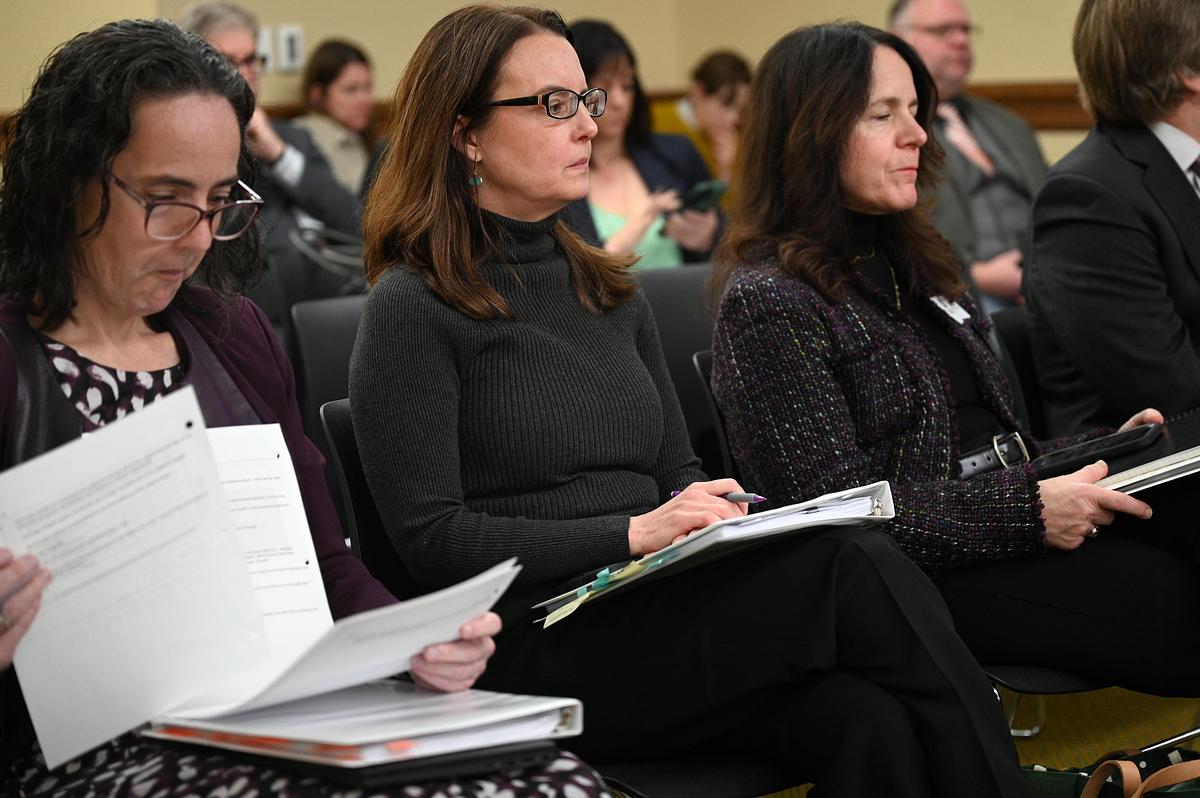
Image 1 Caption: Rebecca de Camara, Medicaid and Health Services Executive Director, listens to testimony during the Health and Human Services Interim Budget Committee meeting on Dec. 15, 2025, in Helena. Credit: Lauren Miller, Montana Free Press, CatchLight Local/Report for America
Image 2 Caption: Logo
_43.png)



