Montana Rural Summit Meets at the Watson Center
Author: mt43news staff reporter
Article Published: 06/19/2026 Volume: 4 Edition: 50MT43 News Staff Reporter
So, you want to build a trail system in your county – you have a good idea, you have volunteers excited about the work; now all you need is the funds and the know-how. The Rural Summit was all about digging deep into the overview of rural community projects and where to find help. Several people from Townsend participated. People came from as far away as Hardin, Hot Springs, Winnett, Roundup, Red Lodge, Billings and Missoula. The event registered 140 groups, including stakeholders from state offices, energy companies, banks and agricultural lenders.
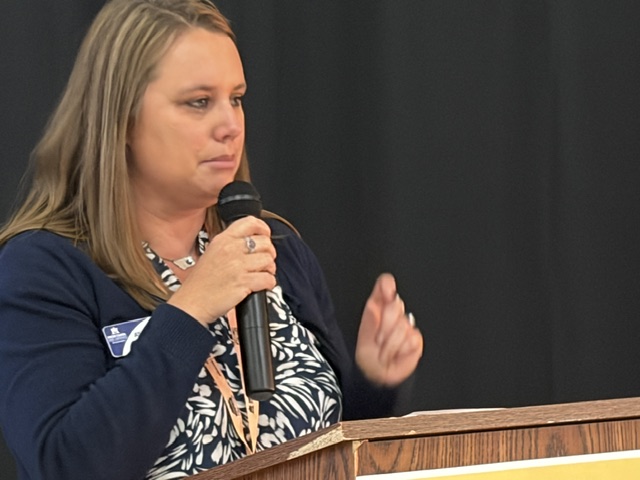
Townsend Mayor Vickie Rauser gave the welcome. MSU Extension Agent Allison Kosto enlightened the group about the generations of families in Broadwater County. She delved into the gold mines and railroad history of the county. She pointed out that Broadwater is currently the fastest-growing county in the state.
Life Defined in Rural Montana:
MSU Department Chair of MSU Earth Sciences, Julia Haggerty, and Headwaters Economics leader Kristen Smith led the breakout session with the State of Rural by directing the audience to a series of wall-sized informational posters to open conversations about what we are as rural communities. The subjects for discussion included Essentials for Living Well, whose facts showed Montana has 83,000 miles of road, 264 towns, of which 128 have fewer than 100 residents, and 243,000 residential units, 10 percent of which are second homes.
The report defined foundational economy as a network of goods, services and infrastructure that every household depends on to live: utilities, roads, schools, clinics, childcare, housing, banks, and emergency services. Each of the posters delved into those parts of the economy: Making a Living in Rural Montana; Productivity, and changing patterns of work, such as AI and self-employed people in Montana. Other posters addressed these titles: Connecting and Critical Infrastructure; Care, Support and Capacity, and the Environment and Community.
Participants studied each poster with a facilitator who queried them about their thoughts on each poster’s content. At the end of the session, facilitators presented some of the participants’ thoughts and solutions.
This reporter gravitated toward the Financial Wealth and Rural Montana poster, facilitated by Mary Rutherford, CEO of Montana Community Foundation. She pointed out that wealth in Montana has grown 4 times faster than the population between 1992 and 2018. Wealth grew most in Flathead and Gallatin Counties. Montana Community Foundation has a web of rural community foundations, such as Broadwater Community Foundation, through which it grants funds to nonprofit organizations for programs and projects in each county. In turn, philanthropists in each county give donations to community foundations to build up saved wealth in Montana.
Small Town Leaders Tell Their Story:
Reimagining Rural community success stories, led by MSU Extension Community Vitality Associate Specialist Jennifer Anderson, explored four rural Montana towns and their projects, successes, and failures to the question “How does limited volunteers affect a town’s ability to pursue big projects?”
Roundup Mayor Sandra Jones said volunteers need a leader, that all groups need to be included all the time, and it’s important to always show appreciation. Those actions retain volunteers. Cutbank representative Jessica Seifert said capacity equals time: “All of us are maxed out to zero, so big projects take a long time to happen.”
To the question “What kinds of projects don’t move forward?"
The panelists said big projects that need over-the-top communication don’t materialize because there are too many sources of communication, including social media, newspapers, newsletters, email and texting. Panelists collectively wondered where to put information to interest talented volunteers.
Retired teacher and community activist in Worden, Marlene Krum, spelled out failure by chapter and verse: “We wanted to put in a public swimming pool, but because of our location, our small volunteer pool, and no money, we just did not have the capacity to make it happen."
Siefert, again from Cutbank, stressed that projects go unfinished because of money, time and having to work with so many different agencies. She continued that planning celebrations and events over and over only leads to stagnation which burns out volunteers.
Forsythe community activist Angela Campbell referred to time too: more projects would happen if nonprofits and government entities would put their grant applications out in plain sight, so small towns could apply. She referred to her “Midnight Ninjas” who work after the kids are in bed to find resources and grants.
To the question “What message would you send going forward?"
The audience laughed when Forsythe’s Campbell said, “If you are bored in a small town, you are not living in a small town.” She expanded by saying there are so many events and activities in small towns, usually led by shakers and movers – people who are connected, making things happen. Those same people have an “unparalleled capacity to care. You must put the project together with the right people.”
The mayor from Roundup Jones put it succinctly: Collaborate in person, not on the computer.
Unlocking Local Leadership:
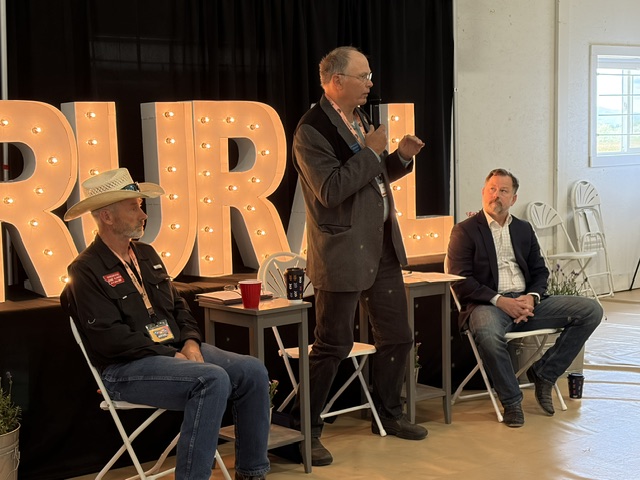
The afternoon session included a presentation by several legislators from Carbon, Fergus, Cascade, and Chouteau counties who walked participants through the best avenues for reaching their district’s legislators. They stressed a handwritten letter and a phone call to the legislator, but not when the legislator is in session, when everyone is busy. They also introduced the idea of a “one-stop shop” for reaching all the government agencies a new business owner must contact.
Townsend Area Chamber of Commerce Secretary and bookstore owner Rachael Brug led a tour of historic downtown following the end of the summit. Nine participants walked with her and Museum curator Linda Huth. They began at The Lodge, where owner Tina Homann gave them the history of the former Masonic Hall and her renovation of the historic building. The group ate pizza at Deep Creek Pizza and ended at the Coffee Bar at Reading Leaves.
Montana State University Extension Service hosted the summit. It was sponsored by Montana Community Foundation, Wells Fargo Bank, AARP, and the LOR Foundation.
Article Images
Click on Image Thumbnail(s) to view fullsize image
PhotoCredit: MT43 News Photographer
Image 1 Caption: Broadwater County Extension Agent Allison Kosto speaks before the Montana Rural Summit.
MT43 News Photographer
Image 2 Caption: Legislators from around the state spoke at the Summit's afternoon session. From left: Representative Shane Klakken, Fergus County; Representative Steve Gist, Cascade County and Representative Brad Barker from Red Lodge, District 55.
MT43 News Photographer