Drones enter Montana corner-crossing debate
 | Author:
Amanda Eggert, Montana Free Press
Montana Free Press |
As hunters get more creative to access ‘corner-locked’ land, Treasure State lawmakers grapple with murky trespassing statute.
This article was originally published in the Montana Free Press and is republished here courtesy of the Montana Free Press.
https://montanafreepress.org/2026/05/13/drones-enter-montana-corner-crossing-debate/?utm_source=ActiveCampaign&utm_medium=email&utm_content=Montana%20Free%20Press%20stories%20available%20for%20republication%3A%20%20TODAY&utm_campaign=RSS%20Republication%20Email
Can a hunter in Montana legally access “corner-locked” public land if they use a ladder to avoid adjoining private property? Is corner-crossing trespassing if a hunter is on horseback? How does the legal calculation change if the hunter uses a helicopter to access public land surrounded by private property?
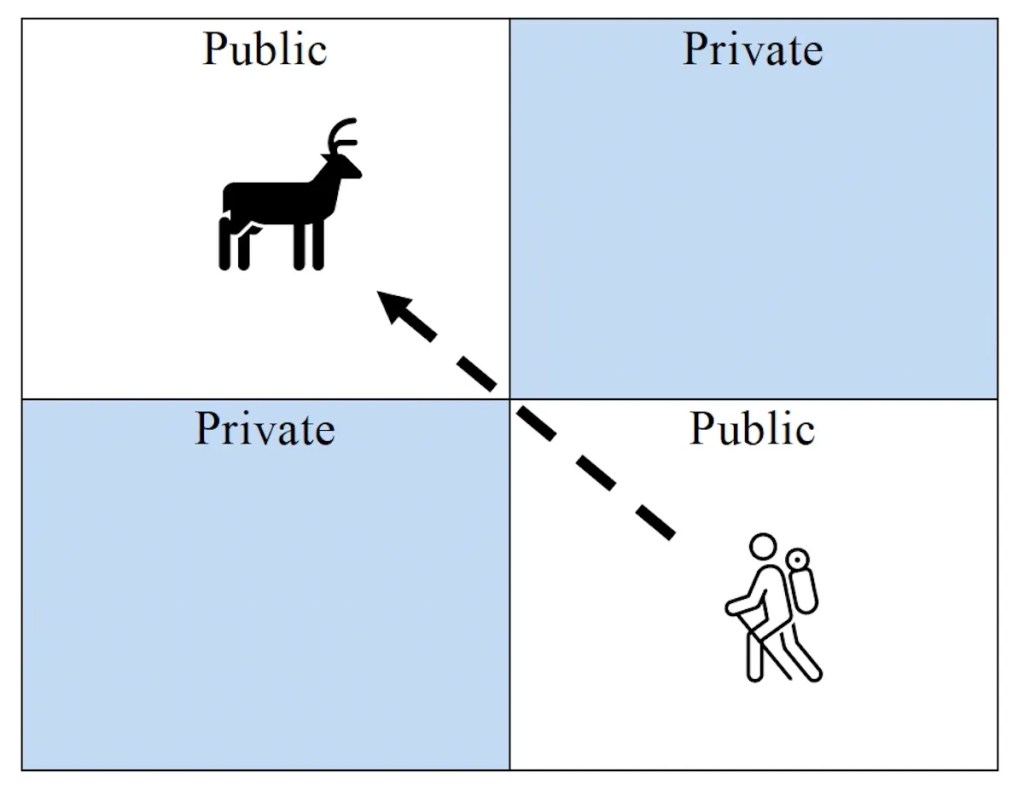
These are a few scenarios recreationists and landowners are grappling with as Montanans push policymakers for legal clarity on corner-crossing, or the act of stepping from adjoining corners of public land where alternating sections of public and private land exist in a checkerboard pattern.
On Wednesday morning, the debate landed before the Environmental Quality Council, a committee of Montana lawmakers and private citizens interested in environmental issues. Lt. Gov. Kristen Juras, who taught property law at the University of Montana before becoming Gov. Greg Gianforte’s gubernatorial running mate, relied on a new law governing the use of drones to argue that hunters who corner-cross are trespassing in the airspace above a landowner’s property. Juras also fielded questions from the committee about the U.S. Supreme Court’s decision not to weigh in on a high-profile lawsuit in Wyoming that a federal appellate court decided in favor of four corner-crossing elk hunters in 2025.
In her presentation to EQC, Juras homed in on the so-called “heaven to hell” doctrine, which holds that a landowner has a “right to the surface and to everything permanently situated above it.” Juras argued that much of the corner-crossing conversation hinges on whether someone who crosses corners is trespassing in the airspace above private property.
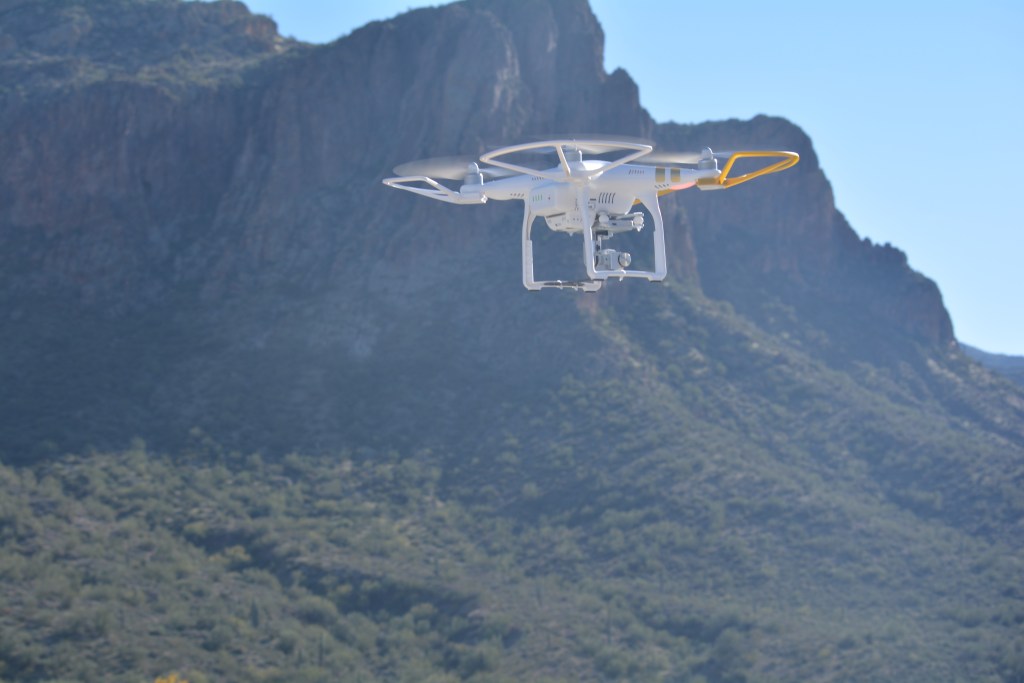
Although airplane pilots are generally clear to fly above private land without civil or criminal trespassing violations, that’s not the case for drone pilots flying below 200 feet without the landowner’s permission — not in Montana, at least. Juras argued that Senate Bill 493 provides clarity on the size of the buffer zone designed to protect Montana landowners’ “full enjoyment” of their property.
“In 2025, you, the Montana Legislature, enacted a law establishing a criminal trespass to fly a drone under 200 feet,” Juras said. “You have recognized a buffer zone of at least 200 feet as being the private property of the surface owner.”
Juras also discussed the Unlawful Enclosures Act, a 141-year-old law that played a key role in the 10th Circuit Court’s decision in the Wyoming litigation. The Unlawful Enclosures Act was designed to keep landowners from barring public access to public land. Juras pointed out that Montana is in a different circuit court, so the 10th Circuit’s decision doesn’t apply here. She also argued that the Supreme Court’s decision not to consider the Wyoming case doesn’t amount to an endorsement of the 10th Circuit’s ruling.
“What they like to see are cases where more than one circuit court has come down with an opinion and there are conflicting opinions,” Juras said. “They want this to percolate a little longer at the circuit-court level before they’re going to take it up at the U.S. Supreme Court.”
In response to a lawmaker’s question about the legality of corner-crossing to gain access to state land, Juras reiterated her position that it’s trespassing.
“I think the law is absolutely clear in Montana: the owner has the right to the surface and the airspace above it,” Juras said. “Do you want someone hovering over your backyard with a drone, looking at whatever your kids are doing out in the backyard? That’s why this Legislature clarified, at least to the use of drones, it is a trespass up to 200 feet of your airspace.”
After Juras’ presentation, Sen. Pat Flowers, D-Belgrade, argued that she has an informed opinion on the issue, but it’s not the only one. He urged the committee to consider “counterpart arguments” to give legislators a “fuller picture of what the legal arguments are going to be, moving forward.”
Corner-crossing began garnering more interest in the West after digital mapping company OnX published a 2022 report revealing 8.3 million acres of “corner-locked” land in the U.S., 871,000 of which are in Montana. The trio of rulings that arose from the Wyoming litigation accelerated interest in the topic. So did Montana Fish, Wildlife and Parks’ subsequent insistence that the practice “remains unlawful in Montana.”
A 2025 Montana Free Press-Eagleton poll found a majority of Montana voters, both Republican and Democrat, support making corner-crossing explicitly legal. Nearly 60% of respondents said the practice should be legal, as compared to 7% who said it should be illegal, 15% who said it shouldn’t be specified either way, and 18% who said they don’t know.
Two Democratic lawmakers, Rep. Josh Seckinger of Bozeman and Sen. Ellie Boldman of Missoula, are drawing up legislation to make corner-crossing legal in Montana. The Montana Legislature is expected to take up the proposal when lawmakers convene in January.
Article Images
Click on Image Thumbnail(s) to view fullsize image
Image 1 Caption: Drone pilots flying below 200 feet without the landowner’s permission could face trespassing charges, according to Montana Senate Bill 493. Drones are now factoring into the corner-crossing debate. Credit: CC
Image 2 Caption: Corner crossing is the act of stepping from adjoining corners of public land where alternating sections of public and private land exist in a checkerboard pattern. Credit: Public domain
Image 3 Caption: Logo
_39.png)


