New voting rules in play as primary election begins
 | Author:
Tom Lutey, Montana Free Press
Tom Lutey, Montana Free Press |
New rules and requirements include registration deadlines, birth year confirmation and photo ID.
As school election ballots started coming back to the Yellowstone County Elections Office on Tuesday, it was clear that voters are still getting the hang of Montana’s new voting laws — especially that mail voters must now write their birth year on their ballot’s return envelope.
Yellowstone County Elections Administrator Dayna Causby said her office sent more than 1,500 notifications to voters explaining that either their return envelopes were either missing a signature or, more often, their birth year in the envelope’s four pre-printed orange squares below the signature line. The latter was first required of Montana voters in 2025 municipal elections, and next in 2026 school elections, which wrapped up Tuesday night.
Absentee ballots for the primary election are due to be mailed to electors on the absentee list Friday. Voters’ learning curve, judging by Causby’s observations, is still pretty steep.
“I have people who voted last fall who still forgot their birth year. I have an election worker in my office who didn’t include her birth year,” Causby said. Of her office’s 1,531 potentially rejected ballots, roughly 216 were resolved before her office started counting school election ballots late Tuesday. Voters had until 5 p.m. Wednesday to clear up any problems so their votes would count.
With the start of primary election voting this week, county election administrators told Montana Free Press, there are new requirements that voters will need to adjust to. People voting in person will need to provide an officially recognized form of ID — Montana driver’s license, Montana ID card, military ID, tribal ID, passport, concealed carry permit, or a student ID issued by a Montana University System school or a member school of the National Collegiate Athletic Association — to receive a ballot. A voter can also use a current utility bill, or bank statement or government document showing a name and current address, combined with a photo ID that includes the voter’s name.
In prior elections, any photo ID was sufficient.
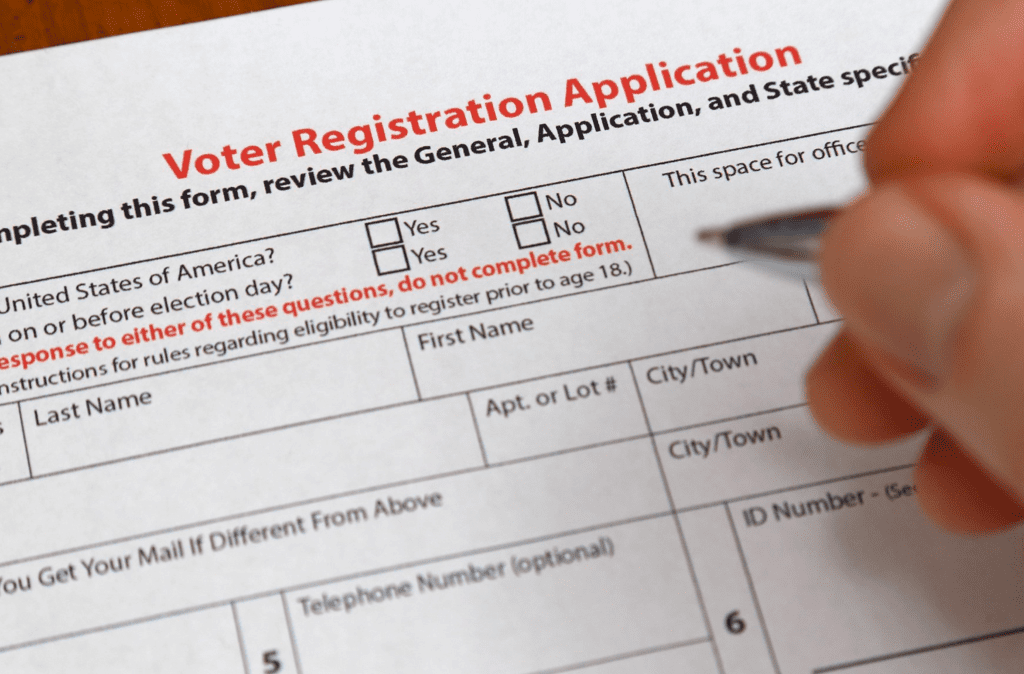
Ravalli County Elections Administrator Regina Plettenburg noted that the laws regarding voter registration in the final days of an election period have also changed, and primary voters needed to be prepared. No longer can Montanans register to vote the Monday before Election Day. Rather, county election offices will be open all day the Saturday before Election Day to register new voters, or to make registration changes like new addresses. Registration to vote in state elections on Election Day will now stop at noon, Plettenburg said, after years in which new voters could register until the polls closed on Election Day. County elections officials asked for the change after multiple years of last-minute voter registrations. The old registration rules guaranteed that anyone in line to register to vote by 8 p.m. on Election Day would be able to register and vote after the official close of voting. In some instances, late-registration lines weren’t resolved until early on the day after Election Day.
Multiple voting rights groups have sued Montana’s secretary of state to overturn the new voter ID and registration laws, but the lawsuit is ongoing, meaning the new laws could be thrown out or blocked by court order any time during the 2026 election cycle.
The birth-year requirement was the first new law to roll out because municipal and school elections are conducted exclusively by mail, meaning no accommodation was necessary for late in-person registration.
Article Images
Click on Image Thumbnail(s) to view fullsize image
PhotoCredit: Adobe Stock Photo
Image 2 Caption: Logo
_37.png)


