Montana GOP Asks Court To Strike Down Gianforte Property Tax Law
 | Author:
Victoria Eavis, Montana Free Press Contributor
Montana Free Press Contributor |
The recent brief amplifies infighting between relatively moderate GOP legislators and hardliners.
This article was originally published in the Montana Free Press and is published here courtesy of the Montana Free Press.
The Montana Republican Party on Thursday asked a state District Court to void the entirety of a transformative new property tax law enacted by state legislators and the Gianforte administration last year.
In a brief filed in an ongoing case in Gallatin County District Court, the Montana Republican State Central Committee sided with the plaintiffs — three current and former Republican legislators — and argued that “there are no surviving constitutional provisions to save” in the new law.
The property tax spikes that hit after Montana’s pandemic-era real estate boom put many Montana homeowners in a financial bind. When legislators gaveled in for the following legislative session in 2025, one of their top tasks was implementing property tax reform.
Lawmakers ultimately did that through Senate Bill 542, which went into effect last year. And after it became law, chairman of the Senate Taxation Committee Greg Hertz, R-Polson, Sen. Tom McGilivray, R-Billings, and former Kalispell Republican Sen. Keith Regier sued the state of Montana and the Department of Revenue. The plaintiffs argue that, while the way the bill changes property taxes may not be unconstitutional, the process lawmakers went through to craft it by taking provisions from other bills violated the constitution.
SB 542 implemented changes to how property taxes are levied in two main parts: major changes that went into effect for the 2025 tax year, and different reforms that are going into effect in 2026 and beyond. For the 2025 tax year, SB 542 implemented a tiered rate system that effectively taxed higher value homes at higher rates, and made available $400 rebates for primary residents. Because residents have already collected those checks and started paying those 2025 tax bills, the Gianforte administration has argued that the ongoing lawsuit could “create chaos” for taxpayers if a judge sides with the plaintiffs.
Joel Silverman, a Helena-based attorney who is not connected to this case but is working on other property tax cases of his own, said in an interview with Montana Free Press that the judge can rule in a myriad of ways.
In one possible version of a favorable ruling for plaintiffs, the judge could strike down the law entirely, Silverman said, which would likely revert the law back to what was in place in 2024. The judge could then order the state “to go get that money back from the taxpayers,” Silverman explained.
“For some people that means they’re getting a giant tax break,” Silverman said. Other people, he added, could “get a tax hike.”
A judge could also take a softer touch by finding that the law is unconstitutional, Silverman explained, but decide that it’s too late for the court to do anything retroactively.
“The court can make a decision on anything in between there,” he said, noting that the judge also has the option of deeming certain parts of the law unconstitutional, but not others.
While SB 542 was carried by Sen. Wylie Galt, R-Martinsdale, it was shepherded along by Rep. Llew Jones, R-Conrad, a frequent adversary of the state Republican Party and many hardline Republican legislators, including Hertz, McGilivray and Regier.
This lawsuit — and the recent amicus brief filed by the state party — is just one example of the infighting among relatively moderate GOP legislators and hardliners.
Republican Gov. Greg Gianforte has continually defended the new law, and last month, he asked the Montana Supreme Court to take the case under its purview and expedite a ruling about its constitutional merits. That request was ultimately denied and the litigation remains in district court for the time being.
In a Friday text message to MTFP, Jones suggested to “think about” what the party’s involvement in the lawsuit means.
“The state Republican Party is now in court attacking Governor Gianforte’s own flagship achievement, a bill Governor Gianforte has celebrated as delivering real relief to 400,000 Montanans,” he said. “Who would have thunk it?”
Gianforte’s office did not respond to a request for comment on the GOP’s lawsuit filing.
While the bulk of the 2025 property tax overhaul came from SB 542, the bill did not start out as the primary piece of legislation to achieve the goals of the governor’s administration and supportive lawmakers. Instead, multiple provisions from other property tax bills were amended into SB 542 as the session progressed, including the tax rate restructuring, an exemption for primary residents and long-term rental landlords, higher tax rates for short-term rental owners and second home owners, as well as the $400 rebates that amounted to more than $90 million in state expenditures.
The plaintiffs in the Gallatin County lawsuit have argued that the Montana Constitution stipulates that the substance of a bill has to conform to its title. That restriction often drives legislators to deliberately introduce bills with broad titles as a strategy to be able to extensively amend a bill down the line.
SB 542 had a broad title, “generally revise property tax laws.” Lawmakers admitted during the 2025 session that they labeled it deliberately to have a vehicle for property tax reform if other bills failed.
“I have enough experience around here that I knew having a wide title was a good idea,” Galt told Lee Newspapers at the time.
While lawmakers often get away with this strategy, the plaintiffs and the Montana GOP contend that SB 542 was a bridge too far, arguing specifically that Jones added the more than $90 million in rebates as an inappropriate way of building consensus around the legislation.
“[The constitutional framers] understood that the manipulation of legislative vehicles — using a bill number as a shell that could be gutted and refilled with different content or using a popular appropriation as a vehicle to carry substantive policy that could not pass on its own merits — was a technique of the corrupt and the powerful,” the legal brief from the Montana Republican Party read.
In its filing, the state GOP took aim not only with the new laws, but with Jones himself. The Conrad Republican, who is facing a primary challenge from Rep. Zack Wirth, R-Wolf Creek, is named in the original complaint and the most recent brief dozens of times.
“Jones admitted that the rate restructuring could not pass on its own,” the brief read. “He admitted that the $90 million appropriation was the vehicle that made passage possible.”
Jones pushed back on that in Friday statements to MTFP, saying that the plaintiffs are suing over how the bill came together, rather than the substance of the bill, because 80% of homeowners saw a property tax reduction in 2025 of 5% or more, according to data from the Department of Revenue.
“Every legislator involved knew exactly what was in this bill and what it did,” Jones said. “The $400 incentive wasn’t a bribe, it was a critical component of making the policy work. When you restructure how an entire class of property is taxed, you need people to register and participate. That’s the cost of doing business on major reform.”
Silverman predicted that no matter how the District Court judge rules, the lawmakers’ case will eventually be appealed to the Montana Supreme Court, meaning that the case could take months, if not years, to be fully adjudicated.
Legislators will gavel back into session in January 2027, where multiple legislators predict there will be a strong appetite to further reform property taxes. Those deliberations will be markedly different depending on the status — and legal rulings — in the existing Gallatin County case.
.
Article Images
Click on Image Thumbnail(s) to view fullsize image
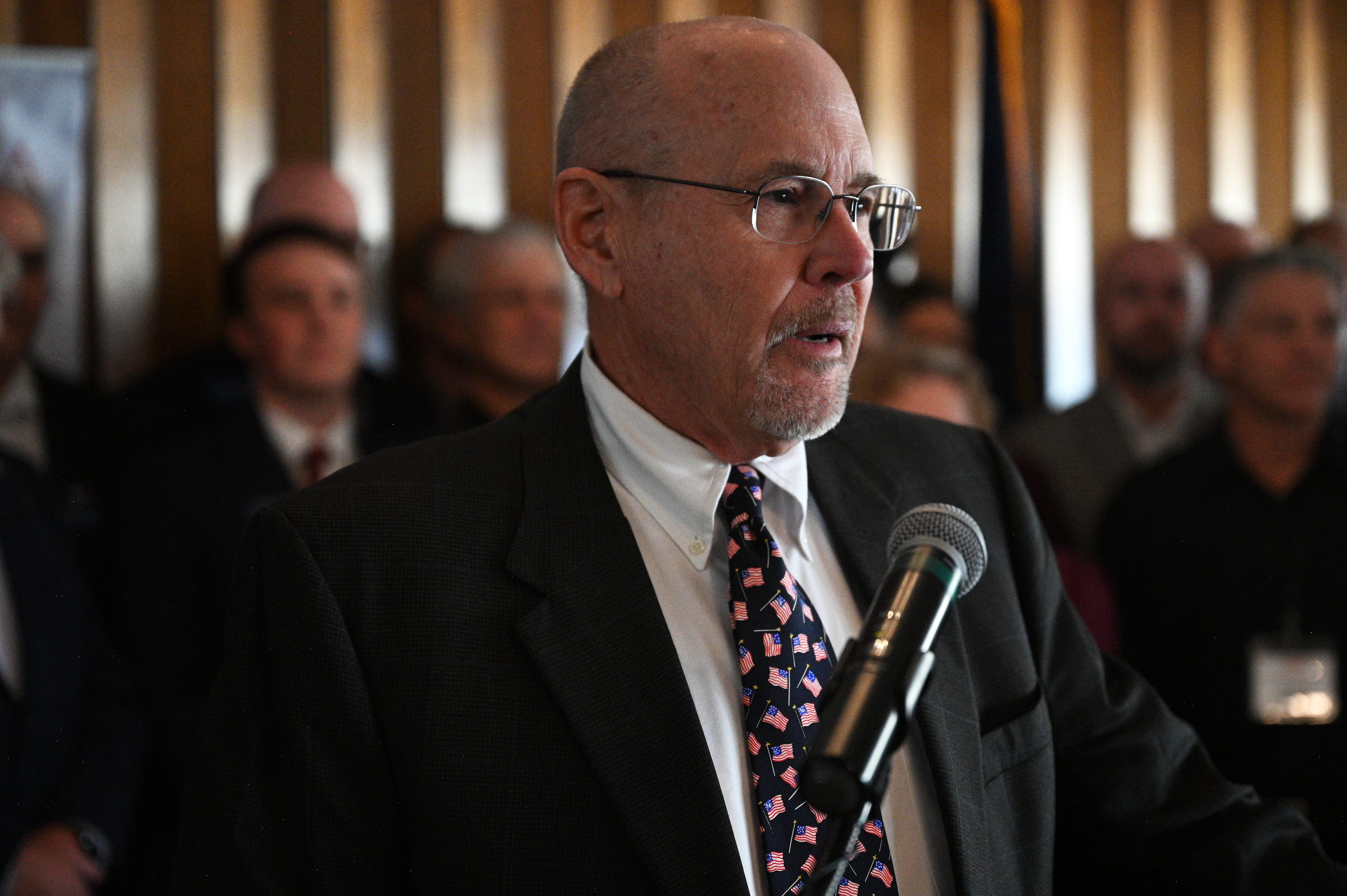
Image 1 Caption: Montana GOP Chairman Art Wittich speaks during a filing press conference at the Montana Republican Legislative Campaign Committee on Feb. 6, 2026, in Great Falls. Credit: Lauren Miller, Montana Free Press, CatchLight Local/Report for America
Image 2 Caption: Logo
_35.png)


