Weed of the Month: Locoweed
 | Author:
Allison Kosto, MSU Broadwater County Extension Agent
MSU Broadwater County Extension Agent |
Article Published: 01/02/2026 Volume: 4 Edition: 26Weed of the Month: Locoweed
Allison Kosto
MSU Broadwater County Extension Agent
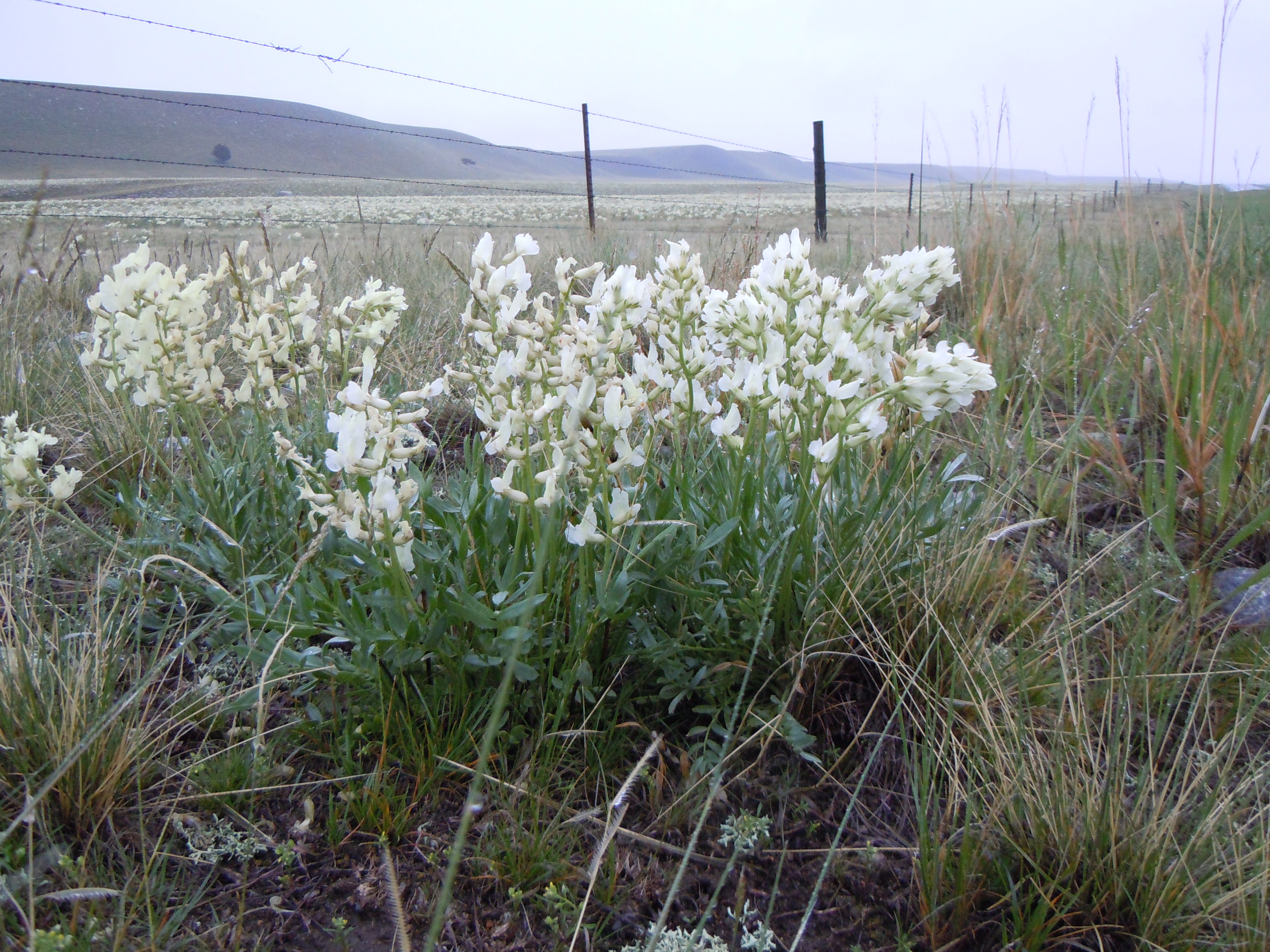
Contrary to how it sounds, locoweed is not a single type of plant. It is actually referring to a group of plants that consists of about 25 toxic legumes that are native to the Western United States. The most common in our area is white locoweed. There are some general distinguishing characteristics among locoweeds and control recommendations are relatively the same for all of them.
Description & Habitat
Locoweeds, sometimes called crazyweed, are in the pea family (legumes) and also include many species of milkvetch. They are found in mountains, foothills and plains. Locoweeds are perennial plants (life cycle of more than one year). Populations tend to be cyclic. This means that populations will fluctuate with environmental conditions. They might boom during wetter years and die out during drought years. Seeds have long viability in the soil, up to 50 years, which allows this to happen.
Common characteristics among all types of locoweeds. They can be erect or prostrate, depending on the variety. Stems and often the leaves are hairy. Instead of one big leaf, they have several leaflets grouped together along the stem like a comb. Flowers resemble pea flowers. They can be a variety of colors but most commonly are white, pink or purple.
The major concern with locoweed is its toxicity to livestock. Interestingly, though, it’s not the plant itself that is toxic. There is a fungus that lives between cells in the leaves that causes a toxic alkaloid called swainsonine. The fungus doesn’t harm the plant and appears to be a symbiotic relationship that has evolved over generations.
Signs of poisoning, which include depression, dull hair coat, loss of muscular control, extreme nervousness, withdrawal and inability to eat or drink, appear 2 to 3 weeks after continuous grazing on the plant. Unlike some other poisonous plants, locoweed is palatable, especially in the spring before other plants are available. Swainsonine clears the body quickly, though so animals can tolerate a small amount of locoweed. It’s the long-term, consistent grazing that is an issue and often results in death. Animals who exhibit symptoms may never fully recover.
Management
Oftentimes, it is not necessary to remove an entire stand of locoweed. Thinning or reducing is often sufficient or altering management practices so that livestock are not grazing rangeland when the risk is the highest. For example, delaying turnout to when there is more forage available and locoweed is fully mature and less desirable to livestock.
Herbicides are generally used when control is needed. Common chemicals include 2,4-D. Curtail, Escort and Tordon (restricted use). Always read and follow the entire label when applying herbicides. Common chemical names are used for clarity, but do not imply endorsement of a product or brand.
For assistance on weed identification and management, contact the MSU Extension Office in Broadwater County at 406-266-9242 or allison.kosto@montana.edu.
Article Images
Click on Image Thumbnail(s) to view fullsize image
PhotoCredit: Matt Lavin, Bozeman
Image 1 Caption: White Locoweed
Photo Credit: Matt Lavin, Bozeman